The world may not feel like a beacon of positivity and light at the moment, especially for the environment and the easing of global tension, but let’s remind ourselves that there are plenty of good-news stories out there, especially in the area of print and paper.
Whether it’s recycling rates continuing to get closer to their maximum limits or the phasing out of plastic packaging in favour of paper-based alternatives, there’s a lot for the paper and print industry to applaud. And with companies and organisations around the world continuing to research and invest in one of our most sustainable resources, this year promises to bring even more reasons to celebrate.
World-Leading Recycling Rate
Europe continues to lead the world in paper recycling, with the announcement in July that the recycling rate for all paper products reached 75.1% in 2024. Across Europe, paper packaging boasts the highest recycling rates among all packaging materials, achieving an impressive 83.1%.
Driven by greater efficiency in the waste stream and consumer awareness, these high recycling rates are reflected in the US, which has a 2024 recycling rate of 68.2%. “The European market of paper for recycling is well-functioning and we are on track to meet our self-imposed recycling target of 76% in Europe by 2030,” said Valeria Salvadori, Chair of the European Paper Recycling Council. “Paper is the most recycled material in the EU and Europe’s paper sector is establishing global benchmarks for recycling rates, which is something I am very proud of.”
Renewables The Dominant Energy Source
Last year marked a significant milestone in energy as it was announced in October that renewable energy overtook coal as the world’s leading source of electricity in the first six months of the year. Despite a growing demand for electricity around the world, the growth in solar and wind power was so strong that it met 100% of this extra demand, helping to drive a small decrease in coal and gas use.
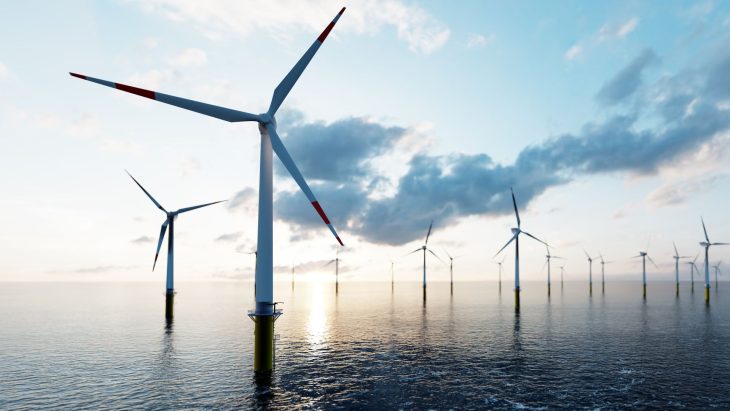
Meanwhile, in the UK, a record number of renewable energy projects were given the go-ahead in 2025, driving the increase in offshore wind farms. The boom was driven by applications to build new battery storage facilities, which almost doubled, while there were seven times as many planning approvals for offshore wind developments as those in 2024.
As one of the largest industrial users of renewable energy, this increase will be welcomed by the European paper industry, which operates using more than 60% renewable energy.
Proof That Paper Is More Sustainable Than Digital Media
When it comes to the processing and retention of information, it’s long been known that print beats digital, which is why the majority of schools prefer students to use paper rather than electronic devices to learn. However, digital media continues to be the dominant communications medium thanks to its relatively low cost and assumption that it’s better for the environment.
While those involved in the paper and sustainability industries understand that this isn’t the case, hard evidence for companies’ claims that digital is less harmful to the environment has been thin on the ground – until now. A study by researchers at the Oeko-Institut in Germany has found that print is less harmful in terms of greenhouse gas emissions than its digital equivalents, with a carbon footprint up to one fifth the size of online.
The team studied the lifecycle of a printed brochure and newspaper ad with a PDF and banner ad, using measurements from printers in Germany, Austria, Switzerland and the Netherlands, and data centres in central Europe. In almost all cases the greenhouse gas potential from print was well below that of digital.

 ANZ
ANZ Brazil
 America Latina
 France
 Germany
 Italy
Italy Portugal
 Nordics
 North America
 South Africa
 United Kingdom