American Latina
 Brazil
 Czech
 Finnish
 France
 Germany
 Italy
 Norway
 North America
 Polish
 Portugal
 South Africa
 Swedish
 Spanish
 United Kingdom


Guest article written by Ian Bates – 12th August 2025
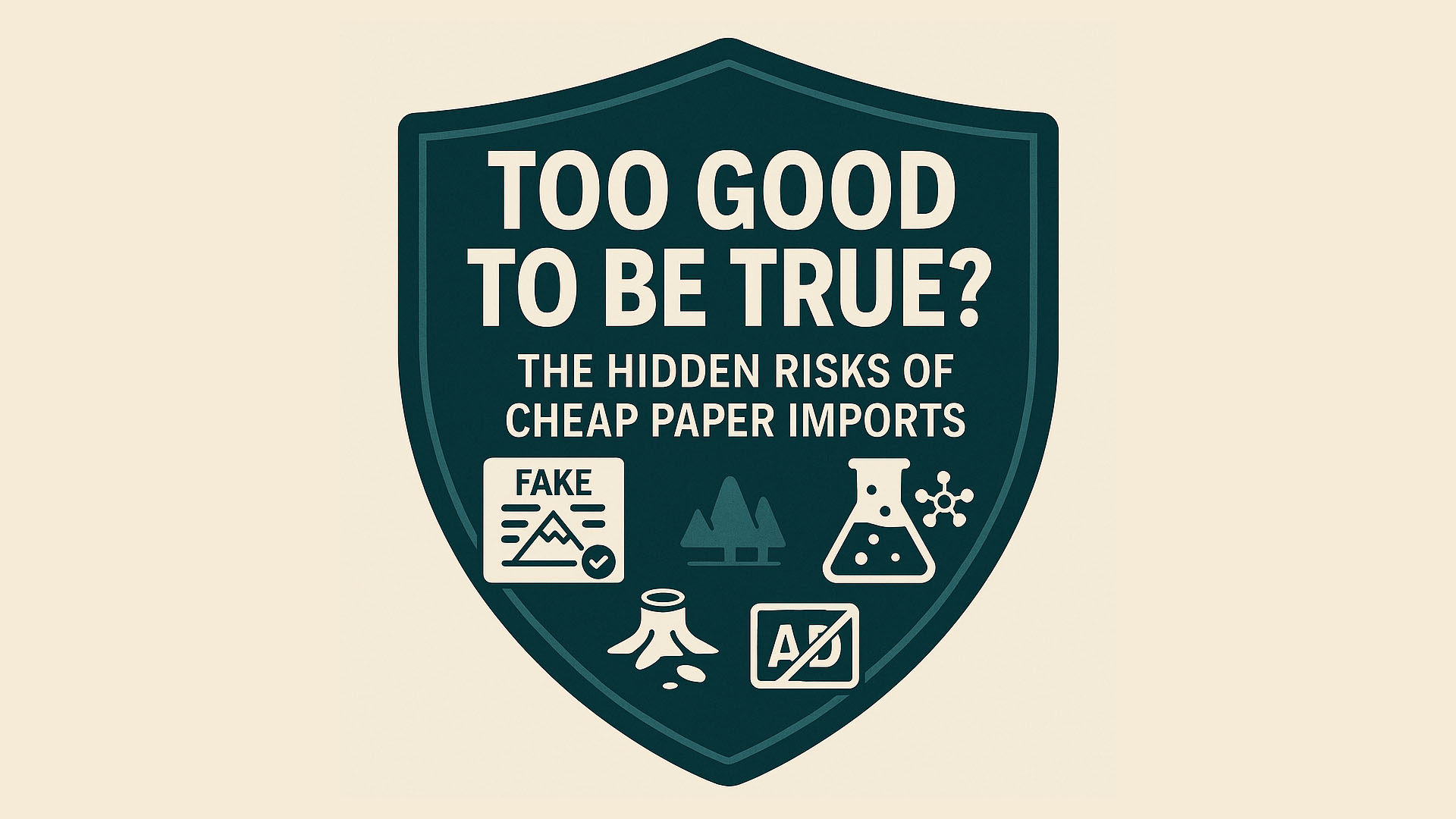
As environmental regulations tighten and brands strive to source “sustainable” packaging, a surge in ultra-cheap paper products from China is raising alarm bells. On the surface, these imports look like low-cost, fibre-based alternatives to plastic. But scratch beneath that green veneer and you find a troubling mix of deforestation risk, misleading certifications, chemical contamination, and false environmental claims.
Roger Wright, packaging and waste expert at BIFFA, warns that the situation is “fraught with danger when it seems too good to be true.” His concerns, shaped by experience at M&S and recent customer interactions, highlight a cocktail of challenges: deforestation, PFAS widely used to create grease and moisture resistant products, chlorine bleaching, BPA in recycled fibres, and the misuse or counterfeiting of FSC certifications.
The China Conundrum
According to EMGE’s World Cartonboard Market Outlook 2030, China’s overcapacity in cartonboard production fuelled by significant investment in new capacity – now outpaces global demand. With US tariffs on Chinese imports exceeding 50%, manufacturers are targeting Europe and the UK as alternative markets. The result: an influx of low-cost board and packaging papers that often fail to meet the rigorous sustainability and health standards expected in Western markets.
While PFAS, BPA, and dioxin risks aren’t unique to China, the combination of looser oversight and rapid production cycles increases the likelihood of contaminated or non-compliant products entering high-heat, food contact applications.
The EUDR Compliance Crunch
From December 2025, the EU’s Deforestation Regulation (EUDR) will require all paper and pulp products entering the EU to be fully traceable and deforestation-free. Many Chinese mills are still falling short, and some brokers have been caught misrepresenting FSC or PEFC certification to bypass scrutiny.
“This is a major red flag,” says Wright. “We cannot afford to trade consumer safety and environmental integrity for cost savings – especially when reputations are on the line.”
The consequences of non-compliance are severe: seized shipments, fines, and potentially irreversible reputational damage for brands.
The Global Plastics Treaty Dimension
Beyond paper-specific regulations, the Global Plastics Treaty (GPT) negotiations in Switzerland represent another critical development. The talks aim to bring greater transparency and accountability to the entire plastics supply chain – something Wright believes should extend to plastic coatings used on paper products.
“This is an opportunity for the plastic and paper industries to speak with one voice on best practice and compliance,” he says. “It’s about creating shared standards that protect both the planet and public trust.”
So, What Can Be Done?
Wright outlines five proactive steps for the industry to get ahead of this issue:
- Educate clients on risks and update procurement/testing protocols.
- Engage regulatory bodies like the ASA and CMA to clamp down on greenwashing.
- Raise awareness among packaging brokers and importers who may be unaware of the risks.
- Shape EPR guidelines to address chemical and sourcing concerns.
- Consider strategic NGO engagement if risks persist unchecked.
To support this, we’ve created a due diligence checklist to help identify red flags in the supply chain and avoid unwitting complicity.
Time to Act, Not Just React
As Jonathan Tame, Managing Director of Two Sides said “When sustainability claims are misleading or certifications falsified, it undermines trust in the entire fibre-based sector. That’s why we’ve made it our mission to challenge greenwash wherever it appears and promote transparency through accurate, evidence-based communication.”
The “flood” of cheap paperboard might look like a short-term cost win, but without rigorous sourcing, testing, and certification, it risks long-term damage to brands, consumers, and the environment.
With the EUDR deadline looming, GPT negotiations advancing, and public scrutiny intensifying, this is the moment for proactive leadership.
Let’s not wait for the exposé – let’s shape the narrative before it shapes us.
For any questions about this article, contact ianhbates@me.com